
A Message from Father Nathan
My dearest people closest to my heart!
God bless you and your generous heart.
The feasts of St. Monica and her son, St. Augustine
This week, we celebrate two important saints’ feasts; one is St. Monica and the other her son, St. Augustine. Their life as mother and son sets an example for all of us to follow in our family lives.
The life of St Monica
Monica was born in northern Africa in 331, in the town of Thagaste, to a wealthy family with strong Christian traditions. She learned the teachings of the Sacred Scripture with great devotion; prayer and assiduous practice of the sacraments forged her interiority, and she was active in the service of the Church community.
The Birth of Augustine
She married Patricius, an ambitious, irascible pagan who was unfaithful to her. Monica was gentle, benevolent, and capable of finding the right moment in dialogue, with her “method” of waiting, patience, and prayer. At the age of 22, she gave birth to her firstborn, Augustine, who was followed by Navigius, and a daughter whose name has been lost. Monica reared them in a Christian household. Widowed at 39, she was left in charge of managing the family property, dedicating herself with love to her offspring.
Devotion of Monica to her “son of so many tears”
A thoughtful and careful mother, Monica experienced great difficulty on account of Augustine, the “son of so many tears”, the restlessness of whose heart is known throughout the world. Before his conversion, Augustine was an ambitious rhetor (one who studies using language effectively) who, in search of truth, moved away from the Catholic faith and went from one philosophy to another. Monica never ceased praying for him and followed all the affairs of his life in an effort to remain close to him.
For this reason, she moved to Carthage and then to Italy, when her son, a professor of rhetoric, at the height of his career, went to live in Milan (then the seat of the Roman Imperial government).
The Conversion & Baptism of Augustine
Her motherly affection and prayers accompanied the conversion of Augustine, who, having received baptism from Bishop Ambrose, decided to return to Thagaste to found a community of God’s servants. Monica was with him.
The life of Augustine
St. Augustine of Hippo was a theologian, writer, preacher, rhetorician, and bishop. Although he experienced many hardships in his life, St. Augustine set an example for men and women around the world to follow.
His work is reflected in the lives of Catholics in the Augustinian tradition who continue to care for those in great need. Augustine was born in 354, a non-believer. Augustine’s mother enrolled her son as a catechumen when he was a child. However, Augustine’s baptism was deferred to a later time in accordance with custom.
In his early years, Augustine possessed an inquisitive mind. He set his sights on a career that would bring him both wealth and fame. Augustine’s parents heartily endorsed their son’s career goals and wanted to provide their son with the best education.
Augustine traveled from city to city and encountered many opportunities and challenges along the way. He was also on a deep spiritual journey, searching for inner peace and lasting happiness.
Prayers of St Monica, Answered
The example, prayers, and influence of Monica played a role in her son’s spiritual journey. They ultimately led Augustine to convert to the Catholic faith. At 33 years old, Augustine was baptized by Bishop Ambrose of Milan. He also committed to spend the rest of his life as a “servant of God.” The words of St. Monica to her son at the deathbed should linger in our hearts every day for all our family members. I quote
“One thing only I ask you, that you remember me at the altar of the Lord wherever you may be.”
With lots of love and blessings.
Ever wanting to be faithful to your service,
— Fr. Sahayanathan Nathan
Set up Online Giving.
You can make a one-time donation or set up recurring gifts.
Join our Parish Family
Register in the parish, so that it’s easy to become a confirmation sponsor or Godparent.
Want to Lend a Helping Hand?
Find volunteer opportunities and share your talents.
Need a Helping Hand?
We are here to help. Request home visits, send a prayer request. For urgent needs call 954.943.3684
Past Messages from Father Nathan
From The Desk Of Father Nathan | Easter Sunday April 4, 2021
At the Easter Vigil, the Exsultet is sung as Mass begins in darkness, illumined only by candles throughout the church. The Exsultet is a beautiful hymn of rejoicing in Christ’s triumph of sin and death.
From The Desk Of Father Nathan | March 28, 2021
Holy Week is also called “Passion Week” begins on Palm Sunday and continues to Easter Sunday. Holy Week provided an opportunity for all the faithful to reflect on their personal sinfulness and their need for Christ and His sacrifice on our behalf.
From The Desk Of Father Nathan | March 21, 2021
This is the year of Saint Joseph December 8, 2020, is the 15th anniversary of the Declaration of Saint Joseph as Patron of the Universal Church. Pope Francis issued an Apostolic Letter entitled Patris corde (“With a Father’s Heart”).
From The Desk Of Father Nathan | March 14, 2021
What is Holy Mass?
What we do and why do we do this?
Vatican II, bulletin 1324 said the following: – The Eucharist is “the source and summit of the Christian life.” 136 ‘the other sacraments and indeed all ecclesiastical ministries and works of the apostolate, are bound up with the Eucharist and are oriented towards it.
From The Desk Of Father Nathan | March 7, 2021
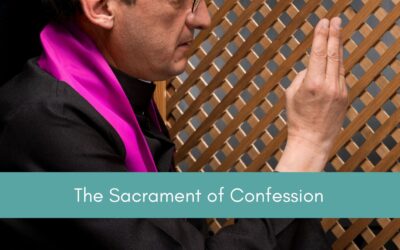
What is the Sacrament of Confession? Why do we need confession? What are the benefits of going to confession? The Sacrament of Confession is one of the most unique and beautiful aspects of Catholicism. Jesus Christ, in His abundant love and mercy, established the Sacrament of Confession so that we as sinners can obtain forgiveness for our sins and reconcile with God, our neighbors, and the Church.
From The Desk Of Father Nathan | February 28, 2021
The Mysteries of our Faith. As the Lenten Season has started please make all the efforts possible to participate in the liturgy and other pious activities of the church. These are the ways and means we are able to understand the mystery of Christ…